
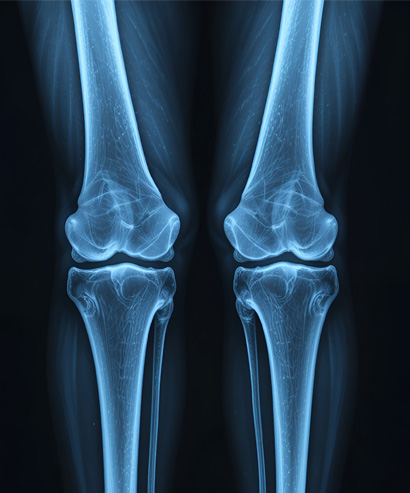
After the impact of a work or auto accident, determining if bones have been fractured or joints misaligned is often the first step in diagnosis. X-rays are a quick and painless imaging technique that uses a small dose of radiation to create pictures of the bones inside your body. At Advantage Healthcare, we utilize X-ray results as a fundamental tool to assess bony injuries, evaluate alignment, and guide the initial stages of your treatment plan.
What Problems Do X-rays Help Diagnose?
X-rays are excellent for visualizing bone and are commonly used to identify:
- Bone fractures (breaks)
- Joint dislocations
- Bone alignment issues
- Signs of arthritis or degenerative changes in joints
- Certain bone infections or tumors (though less common in this context)
- Presence of foreign objects (like metal fragments)
How Do X-rays Work?
Positioning
A technologist will position the part of your body being examined between the X-ray machine and an image receptor (film or digital detector).
Exposure
You’ll need to hold still for a few moments while a beam of X-rays passes through your body to create the image. The procedure itself is very quick and painless.
Multiple Views
Often, images are taken from different angles (e.g., front and side) to get a complete view.
What Are the Benefits of X-rays?
- Fast and Widely Available: X-rays are quick to perform and readily accessible.
- Excellent Bone Detail: Clearly shows fractures, alignment, and bony structures.
- Guides Initial Treatment: Essential for determining immediate steps like casting, bracing, or ruling out significant fractures.
- Lower Cost: Generally less expensive than MRI or CT scans.
Why Utilize X-ray Results at Advantage Healthcare
- Foundation of Diagnosis: While X-rays may be performed elsewhere, our physicians review them carefully to inform your diagnosis and initial treatment strategy.
- Appropriate Triage: Helps determine if more advanced imaging (like MRI or CT) is needed.
- Monitoring Healing: Follow-up X-rays can sometimes be used to track fracture healing.
Frequently Asked Questions
Are X-rays safe? What about radiation exposure?
X-rays use a very small dose of ionizing radiation. The benefit of an accurate diagnosis generally far outweighs the minimal risk associated with the low radiation exposure from standard diagnostic X-rays. Pregnant women should always inform the technologist before an X-ray.
Does getting an X-ray hurt?
No, the X-ray procedure itself is painless. You may experience some discomfort if you need to hold an injured body part in a specific position briefly.
How long does an X-ray take?
The actual image capture takes only seconds. The entire process, including positioning, usually takes just a few minutes per body part.
Do I need to prepare for an X-ray?
Generally, no special preparation is needed. You may be asked to remove jewelry, eyeglasses, and other metal objects from the area being imaged, and possibly change into a gown.
Essential Imaging for Bone Injuries.
X-rays are often the starting point for diagnosing injuries after an accident. Your doctor will determine if X-rays are necessary and will review the findings with you to guide your care.