
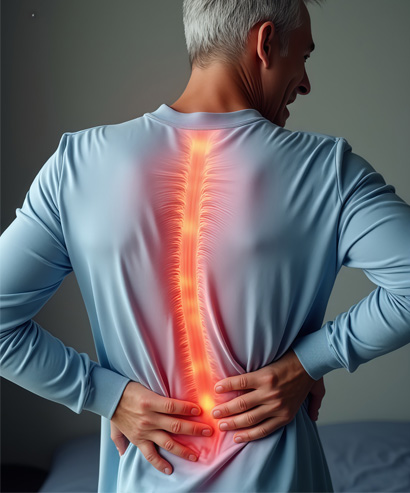
For individuals suffering from severe, chronic nerve-related pain in the back, legs, or arms following an accident or surgery – pain that hasn’t responded to other treatments – Spinal Cord Stimulation (SCS) can be a life-changing option. At Advantage Healthcare, our pain specialists evaluate patients for SCS therapy, a proven technology that uses mild electrical pulses to mask pain signals before they reach the brain, offering significant relief and improved quality of life for appropriate candidates.
What Problems Does Spinal Cord Stimulation Address?
SCS is typically considered for intractable (difficult to treat) chronic neuropathic pain conditions, such as:
- Failed Back Surgery Syndrome (FBSS) or Post-Laminectomy Syndrome (persistent pain after spine surgery)
- Complex Regional Pain Syndrome (CRPS)
- Chronic radiculopathy (nerve root pain) unresponsive to other therapies
- Other persistent neuropathic pain conditions in the trunk or limbs
How Does Spinal Cord Stimulation Work?
SCS involves two stages:
Trial Phase
Thin, insulated wires (leads) are temporarily placed in the epidural space near the spinal cord, connected to an external pulse generator. For about 5-7 days, you test the system to see if it significantly reduces your pain (typically a 50% or greater reduction is desired). This is a minimally invasive outpatient procedure.
Permanent Implant
If the trial is successful, a small, pacemaker-like battery (pulse generator) is surgically implanted under the skin (usually in the buttock or abdomen), and permanent leads are placed in the epidural space. This is also typically an outpatient or short-stay procedure.
You control the stimulation levels with a handheld remote.
What Are the Benefits of Spinal Cord Stimulation?
- Significant reduction in chronic pain for many patients
- Reduced need for opioid pain medications
- Improved ability to participate in daily activities and improved quality of life
- It’s reversible – the system can be turned off or surgically removed if needed
- You can try it first with the temporary trial
Why Choose Advantage Healthcare for SCS Evaluation?
- Experienced pain management physicians skilled in SCS patient selection, trials, and implantation.
- Thorough evaluation process to determine candidacy.
- Support throughout the trial and post-implantation phases.
- Knowledge of navigating insurance authorization for SCS therapy.
Frequently Asked Questions
Is the SCS implant procedure major surgery?
The trial is minimally invasive. The permanent implant is a minor surgical procedure, usually performed on an outpatient basis or with a short hospital stay.
What does the stimulation feel like?
Older systems often created a tingling sensation (paresthesia) that replaced the pain. Newer systems may offer stimulation that is not felt (paresthesia-free) while still providing pain relief. Your doctor will discuss options.
How long does the implanted battery last?
Rechargeable systems can last many years (e.g., 8-10+ years) before needing replacement surgery for the battery. Non-rechargeable batteries last less time but don’t require regular charging.
Can I have an MRI with an SCS system?
Many newer SCS systems are compatible with MRI scans under specific conditions. It’s crucial to know the make and model of your system and follow safety guidelines.
Explore Advanced Pain Relief Options.
If chronic neuropathic pain dominates your life after other treatments have failed, SCS might offer hope. Contact us to schedule a consultation and see if you are a candidate.