
What is an EMG/NCV?
Electromyography (EMG) and Nerve Conduction Study (NCV) are diagnostic tests used to evaluate the health and function of your muscles and nerves. These tests help determine if you have a nerve or muscle disorder and are commonly used to diagnose conditions such as carpal tunnel syndrome, peripheral neuropathy, radiculopathy, and muscle diseases.
Why is an EMG/NCV Test Performed?
Your healthcare provider may recommend an EMG/NCV if you experience symptoms such as:
- Numbness or tingling
- Muscle weakness
- Unexplained pain
- Cramping or twitching
- Radiating pain from the spine to the limbs
These tests help pinpoint the cause of nerve or muscle dysfunction and guide treatment plans.
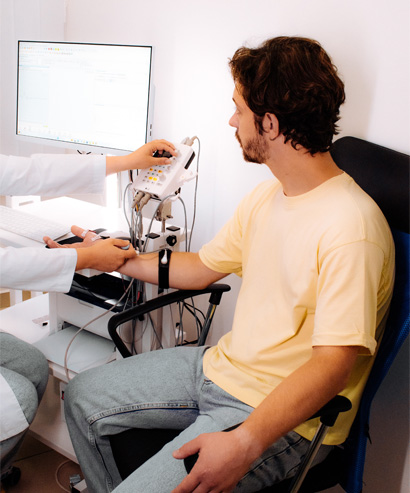
What to Expect During the Test
Nerve Conduction Study (NCV)
Small electrodes are placed on the skin over specific nerves. A mild electrical pulse stimulates the nerve, and the response is recorded to assess nerve function.
Electromyography (EMG)
A small, thin needle (similar to acupuncture needle) is inserted into select muscles to record their electrical activity when at rest and during movement.
Testing Areas
For upper extremities, testing will be up to the shoulder and for the lower extremities, testing will be slightly above the knee.
Pre-Test Do’s and Don’ts

 Do’s
Do’s
- Take a shower before your appointment to remove any lotions or oils from your skin.
- Wear loose, comfortable clothing to allow easy access to the test area.
- Inform your doctor of any medications you are taking, especially blood thinners or muscle relaxants.
- Eat a light meal before the test unless instructed otherwise.
 Don’ts
- Do not apply lotions, creams, or oils on the skin before the test, as they can interfere with electrode placement.
- Do not wear tight clothing that may need to be removed for electrode placement.
After the Test You may experience mild discomfort or soreness at the electrode or needle insertion sites, which usually resolves within a few hours. The test has no side effects and patients don’t have to stop any medications before the test. Your doctor will discuss the results with you and determine the next steps for your care. If you have any questions or concerns before your EMG/NCV, contact your healthcare provider for guidance.